
Monthly Archives: July 2020
Protected: NDX
On a lighter side
The way I relax is working with flowers… buying them, arranging them, growing them, selling them, and just looking at them. I always have flowers around in my home. They brighten up everything. Happiness is a conscious choice. 🙂
Here are just a few of the many arrangements I created during the past several months for customers. There are still good things happening in the world.

















Fewer Children Are Dying During the Covid Lockdown
We can imagine that the only reason why fewer infants are dying during the lockdown that prior to the lockdown is because they are not going to see the doctor for their routine vaccination schedule. Please see the entire article here: https://childrenshealthdefense.org/news/lessons-from-the-lockdown-why-are-so-many-fewer-children-dying/
“As untimely deaths spiked among the elderly in Manhattan nursing homes and in similar settings all over the country, something mysterious was saving the lives of children. As springtime in America came along with massive disruptions in family life amid near universal lockdowns, roughly 30% fewer children died.”
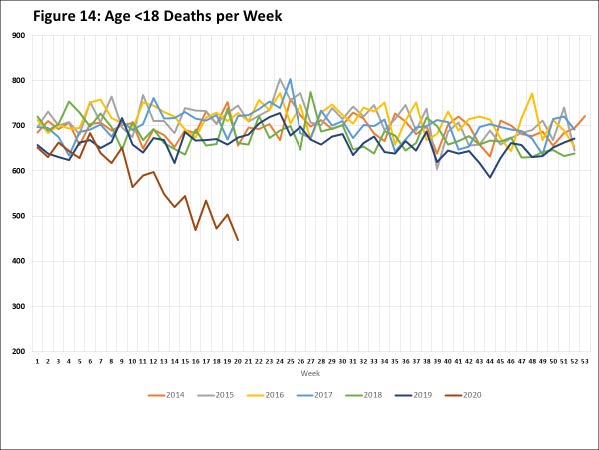
The dramatic decrease in deaths starting in March 2020 when the lock downs began came from infants:
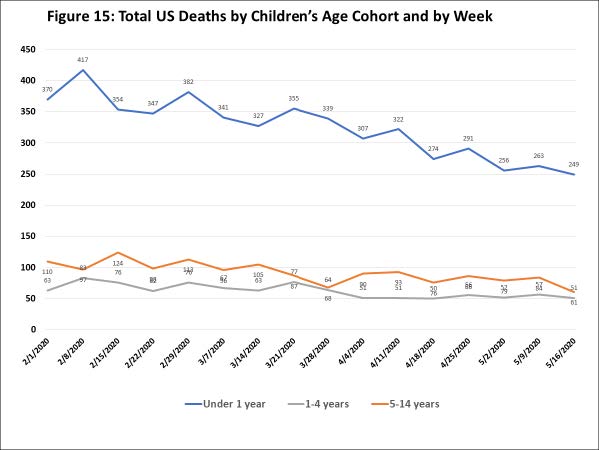
“We have no specific data on the trend in SIDS deaths during the pandemic. We have, however, heard anecdotal reports from emergency room (ER) doctors suggesting some have observed a decline in SIDS. One group of doctors who might see 3 cases of SIDS in a typical week has seen zero cases since the pandemic and associated lockdowns began.
What has changed during this period that might have such an effect? Are infant deaths not being recorded? Are parents taking better care of their families while working remotely and their children are not going to school? There are many possible hypotheses about the infant death decline.
One very clear change that has received publicity is that public health officials are bemoaning the sharp decline in infant vaccinations as parents are not taking their infants into pediatric offices for their regular well‐baby checks. In the May 15 issue of the CDC Morbidity and Mortality Weekly Report (MMWR), a group of authors from the CDC and Kaiser Permanente reported a sharp decline in provider orders for vaccines as well as a decline in pediatric vaccine doses administered. [8] These declines began in early march, around the time infant deaths began declining.”
If there is any good coming from the lockdowns, this has got to be it.
On Face Masks
Well we are getting closer.

Not quite there yet, but getting closer?


What does the research say about masks?
What Does Research Say About Face Mask Effectiveness?
Dr. Chris Murray, director of the Institute for Health Metrics and Evaluation, has said that face masks represent “probably a 50% protection against transmission,”12 but other estimates are less reassuring. For example, a study on the ability of masks to block COVID-19, which is caused by the SARS-CoV-2 virus, published by South Korean researchers in the Annals of Internal Medicine in April 2020, found:13
“Neither surgical nor cotton masks effectively filtered SARS-CoV-2 during coughs by infected patients. Prior evidence that surgical masks effectively filtered influenza virus informed recommendations that patients with confirmed or suspected COVID-19 should wear face masks to prevent transmission.
However, the size and concentrations of SARS-CoV-2 in aerosols generated during coughing are unknown.
Oberg and Brousseau demonstrated that surgical masks did not exhibit adequate filter performance against aerosols measuring 0.9, 2.0, and 3.1 μm in diameter … assuming that SARS-CoV-2 has a similar size [to SARS–CoV], surgical masks are unlikely to effectively filter this virus.”
Contamination was found on the outside of the masks, wrote the researchers:14
“Of note, we found greater contamination on the outer than the inner mask surfaces … The mask’s aerodynamic features may explain this finding. A turbulent jet due to air leakage around the mask edge could contaminate the outer surface. Alternatively, the small aerosols of SARS-CoV-2 generated during a high-velocity cough might penetrate the masks.
In conclusion, both surgical and cotton masks seem to be ineffective in preventing the dissemination of SARS-CoV-2 from the coughs of patients with COVID-19 to the environment and external mask surface.”
Criticism of the study by other researchers was brisk, ranging from questioning the handling of the masks before the experiment, which could have caused the observed contamination, to noting that
You can read the whole article here: https://articles.mercola.com/sites/articles/archive/2020/06/19/do-face-masks-help-against-coronavirus.aspx
 My Journey Towards Understanding the Markets